 Luca Jayden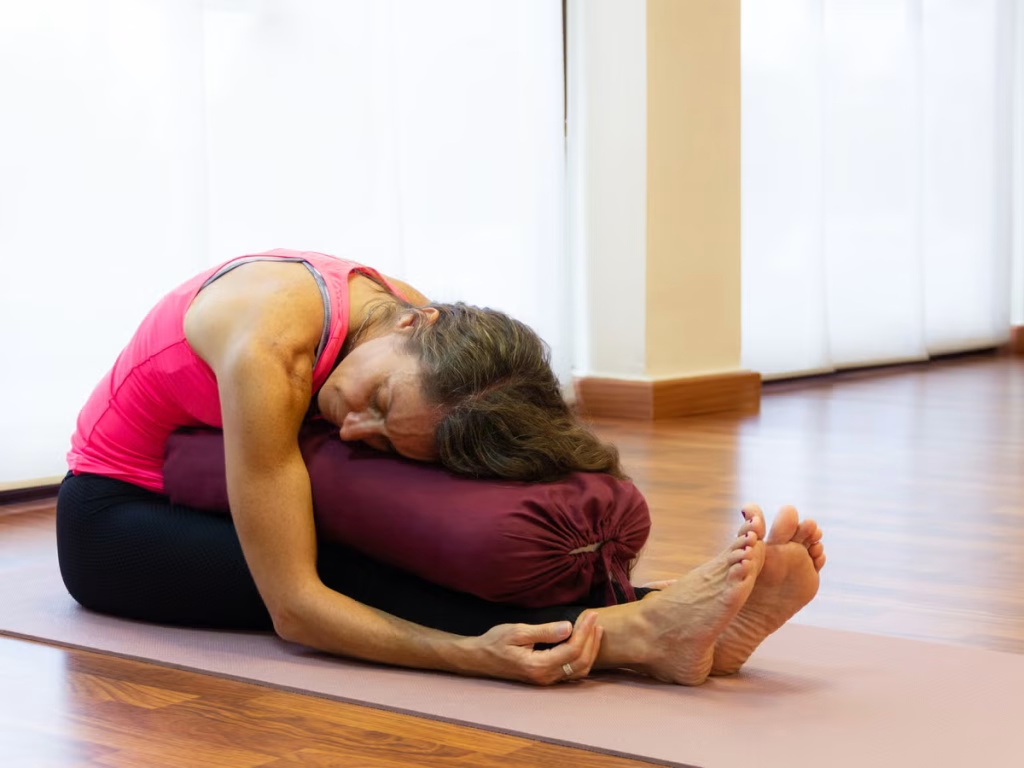
Why Yin Yoga Supports Deep Recovery for Stress Heavy Urban Lifestyles Modern city life can keep the body and mind in a constant state of alertness. Work pressure, screen time, commuting, social commitments and poor sleep can all leave people feeling tense even when they are technically resting. This is why yin yoga is becoming valuable for stress-heavy urban lifestyles. It offers a slow, quiet practice that supports deep recovery through stillness, breath and long-held postures. Yin yoga is different from active movement styles. It asks students to slow down and stay with sensation. This can feel challenging at first, especially for people who are used to moving quickly. However, that slowness is exactly what makes the practice useful. It creates space for the nervous system to settle and for the body to release layers of tension.
Why urban stress requires deeper recovery
Many people think recovery means sleeping more or taking a day off. These can help, but stress often remains stored in the body as tight shoulders, shallow breathing, jaw tension, restless thoughts or stiffness. Deep recovery requires the body to feel safe enough to soften. Yin yoga supports this by creating a calm environment and using long-held positions. The body is not rushed. The breath has time to slow. The mind has fewer tasks to manage. This can help students move from constant activity into a more restful state.
Stillness as a recovery tool
Stillness can be difficult for busy adults. When the body stops, the mind may become louder. Yin yoga teaches students to stay with stillness gradually. They learn to observe sensation without immediately reacting. This is not passive laziness. It is active awareness. Remaining still in a supported posture can reveal where the body grips and where the mind resists slowing down. Over time, students may become more comfortable with quiet.
Long-held postures and tissue release
Yin yoga often involves holding postures for longer periods. These postures may target areas such as the hips, spine, hamstrings and shoulders. The intention is not to force flexibility, but to allow gradual release. Students are encouraged to find an appropriate edge, a place where sensation is present but manageable. This teaches patience and respect for the body.
Areas commonly supported by Yin practice
A consistent Yin routine may help students explore:
- Hip release
- Lower back comfort
- Hamstring length
- Shoulder relaxation
- Spinal stillness
- Breath awareness
- Nervous system recovery
The practice works best when students avoid pushing aggressively.
Breath and the nervous system
Breath plays a central role in Yin yoga. Slow breathing can help the body settle into the posture. It also gives the mind something steady to return to when discomfort or restlessness appears. For people with stressful routines, this breath awareness is practical. They can use it outside class during work tension, evening restlessness or moments of emotional pressure.
Why Yin is not only for tired days
Yin yoga is often associated with rest, but it can also support active people. Athletes, gym-goers, runners, dancers and busy professionals may all benefit from slower recovery work. Active lifestyles need balance. Yin provides that balance by focusing on release and stillness rather than performance. It reminds students that recovery is part of progress.
Emotional release and quiet practice
Slow practices can sometimes bring up emotions because the body finally has space to feel. Students may notice frustration, sadness, impatience or relief. This does not mean something is wrong. It means the practice is creating room for awareness. A good Yin class should feel supportive and non-judgemental. Students should be encouraged to rest, adjust and breathe.
A supportive setting for deep recovery
A calm studio such as Yoga Edition can support Yin yoga by providing an environment where students feel safe enough to slow down. The setting matters because recovery is easier when the room feels quiet, respectful and focused. A guided Yin practice can help students enter stillness more comfortably than trying to force relaxation alone at home.
Recovery as a necessary routine
Yin yoga supports deep recovery because it gives the body time, space and permission to release. For stress-heavy urban lifestyles, this is not a luxury. It is a necessary counterbalance to constant output. By practising stillness, breath and patience, students can build a healthier relationship with rest. Over time, Yin yoga can become a regular way to restore energy, calm the mind and care for the body in a demanding city.